Love Maniac Storage and Cleanup Guide: Room for the Game to Breathe
Manage storage around Love Maniac with this cleanup guide covering the 104.5 MB file, installation room, updates, cache, and keeping an older phone healthy.

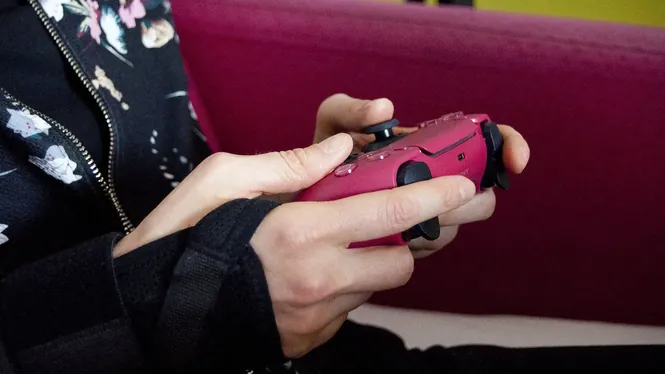
Set up keyboard and controller style play for Love Maniac on Android with this guide to input choices, Bluetooth checks, precision differences, and comfort habits.
In a bullet-hell game the input device is half the difficulty setting. Touch, keyboard, and controller style inputs each move the heart-soul with a different grain: continuous slides, discrete taps, and stick or pad steps. Love Maniac supports touch natively and keyboard input where available, and choosing between them deliberately is a real performance decision.
Players often blame patterns for what their input is doing to them. A week of honest input comparison has rescued more stuck players than any strategy guide ever written.
There is also a fatigue dimension to grain: continuous touch tires the thumb joint, discrete taps tire the fingers differently, and long session players sometimes choose an input by which tiredness they prefer. Love Maniac short sessions forgive either, but honesty about it prevents mystery aches.
For the complete homepage guide, visit Love Maniac APK for Android.
Input is difficulty:
Pairing a keyboard with an Android phone or tablet is standard system work: Bluetooth pairing through settings, or a wired connection through an adapter the device supports. Once the system recognises the keyboard, games that accept keyboard input, as this one lists where available, simply receive it.
Test the pairing inside a gentle battle first. Setup verified under no pressure stays trusted under pressure, while setup first tried in a hard encounter fails confusingly and unfairly.
The full control picture is in our Android controls guide.
Setup order:
Wireless input can lag, and lag is poison to dodging. The check is a comparison: play the same easy pattern on touch and on the wireless keyboard back to back, and trust your hands verdict over any specification sheet. If the keyboard feels late, it is late enough to matter here.
Wired connections erase the variable entirely. For a game where fractions decide, many keyboard players keep a cable for serious sessions and wireless for casual ones.
Delay also hides in televisions and big displays used as monitors, where picture processing adds its own lag to wireless lag. Keyboard players testing on a TV should measure the whole chain, not only the keyboard link, before condemning an input.
Delay discipline:
Keyboard taps excel at micro movements: the tiny, exact steps that thread dense patterns. Touch excels at long, fluid repositioning across the arena. Skilled players sometimes wish for both inside one battle, which is why neither input wins universally and personal error counts should decide.
Count your deaths by input for a week each. Data ends the argument your preferences keep restarting, and the result is occasionally surprising even to experienced players.
Precision profile:
Keyboard play usually means a desk, which introduces posture into a phone game conversation. Screen at comfortable height, wrists supported, phone or tablet propped rather than held: the setup that serves a workday also serves an evening of pattern dodging, and tired wrists are an input problem like any other.
Take the ergonomics seriously on long sessions. Bullet-hell concentration hides body complaints until they are loud, and a stand costs less than the recovery.
Posture has a pattern reading dividend: a stable, supported player makes smaller, calmer movements. Slouching over a phone on a sofa is the posture of panic dodging, while a set desk quietly manufactures the micro movement this genre rewards.
Desk setup:
Players often ask about gamepads. The honest position for this title is that keyboard support is the documented alternative input, while controller behaviour depends on the device and setup recognising it as input. Experiment if your hardware pairs, but build no plans on undocumented support, and let touch and keyboard carry the serious play.
Where a controller does work through system mapping, the same delay and precision checks apply. Novelty is not an advantage until testing promotes it to one.
Subtitles and one-button accessibility are covered in our accessibility guide.
Controller honesty:
Nothing obliges a player to marry one input. Many regulars touch on the phone away from home and sit at keys for home sessions, accepting a small recalibration battle at each switch. The recalibration is real but short, and the flexibility is worth more than purity.
What must not switch is your expectation: judge an input only after its recalibration battle, never during it. First sessions on any device lie fluently.
Recalibration battles should be genuinely easy ones, not merely familiar ones. Familiar hard battles punish recalibration and teach nothing except that switching feels bad, which is the one lesson that will make a player stop switching forever.
Switching rules:
Input variety is accessibility infrastructure. One-button mode simplifies within touch; keyboards move the game to different hands, postures, and abilities entirely. A fan game offering these routes deserves credit for reach that many commercial titles do not bother matching.
Players who need a route should test all of them without hierarchy in mind. The best input is the one that disappears, leaving only the game between you and the patterns.
Credit for input reach should be repeated in purchasing decisions too: players who need specific inputs can choose their next games partly by these menus. A fan game that publishes its input options clearly, as Love Maniac does in its listing, respects that planning.
Access thinking:
Start where you are: touch, tonight, with the comparison scheduled rather than theorised. If patterns feel slippery after a fair week, add the keyboard trial. If keys feel late, wire them or return to touch with data instead of doubt.
Input loyalty should be earned per player, per device, per game. This game gives you real choices; run the experiments and keep the winner.
Recommendation:
Input devices spend battery differently: Bluetooth radios sip steadily, wired connections sip almost nothing, and touch spends it on the display alone. On an older phone with a tired battery, the wired keyboard is quietly the endurance champion for long home sessions.
Travel reverses the verdict, because a keyboard is luggage and touch is not. Input wisdom is situational all the way down, which is why this guide insists on experiments rather than commandments.
Battery angles:
A desk setup invites an audience in a way a phone in hands never does: the screen faces the room, the clicking is audible, and a hard battle becomes a small performance. For the right household that is a delight, and for an adult themed game it is also one more reason the desk belongs in a private room.
Set the stage knowingly: private space, willing audience, and the game treated with the same discretion as anywhere else. The setup is social; the rules have not changed.
Desk society:
Touch, keyboard, and controller style play move the same soul with different grains, and the right grain is a personal, testable fact. Pair carefully, check Bluetooth delay honestly, count errors per input for a week, and let the numbers rather than novelty choose your setup.
Whichever input wins, the accessibility story deserves appreciation: a fan game offering one-button mode and keyboard routes is reaching for players many bigger titles ignore.
Run the input experiments this month rather than someday. An evening of comparisons can retire a year of low grade frustration, and Love Maniac is an ideal laboratory for it: honest patterns, honest menus, and no stake in which device your hands prefer.
Download APKManage storage around Love Maniac with this cleanup guide covering the 104.5 MB file, installation room, updates, cache, and keeping an older phone healthy.
Compare Love Maniac fairly with official RPG releases in this guide covering production scale, price, updates, support, content ratings, and what fan parodies do best.
Play Love Maniac responsibly with this adult guide to device privacy, shared spaces, notifications, storage discretion, and respecting other people boundaries.